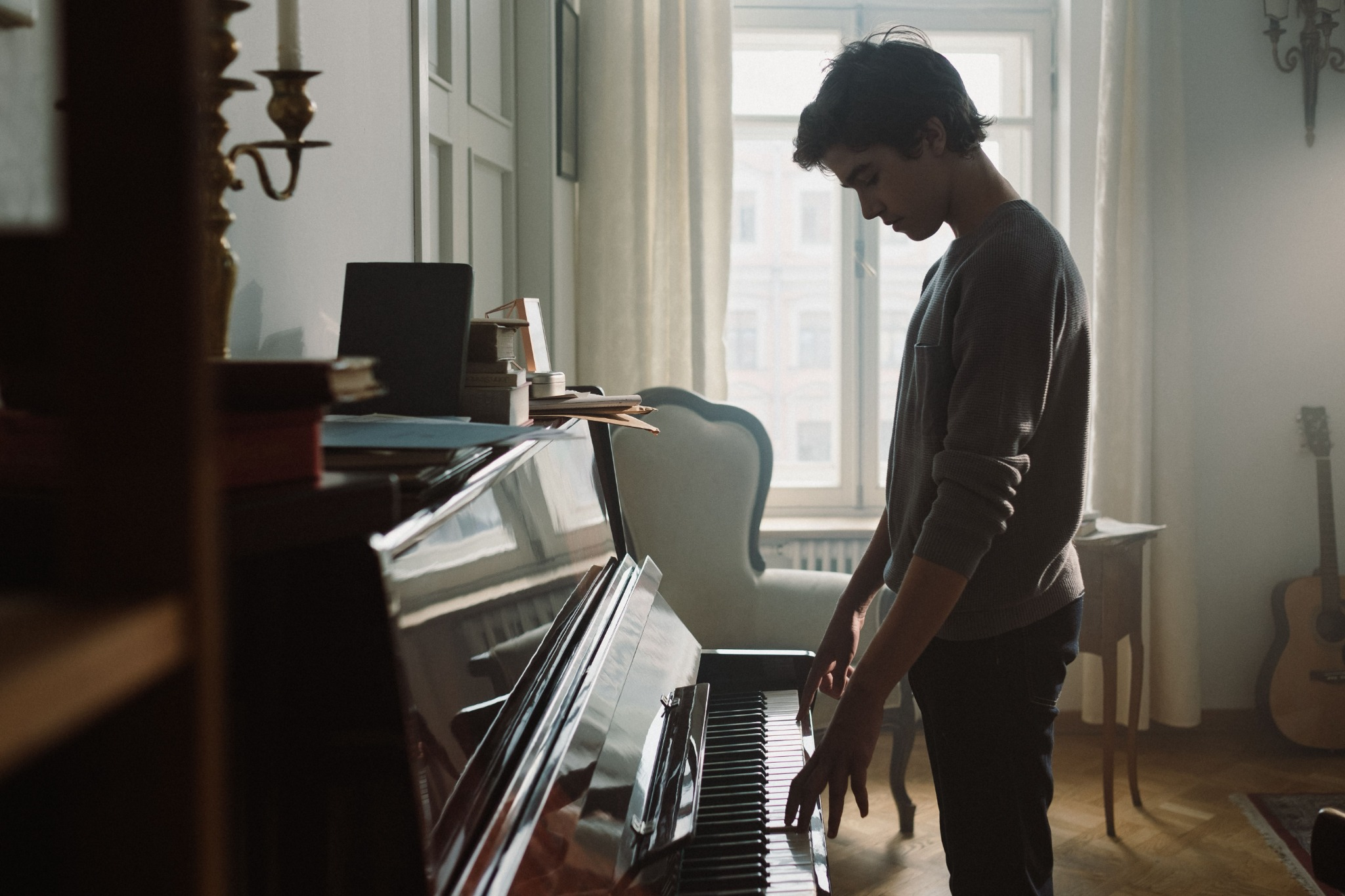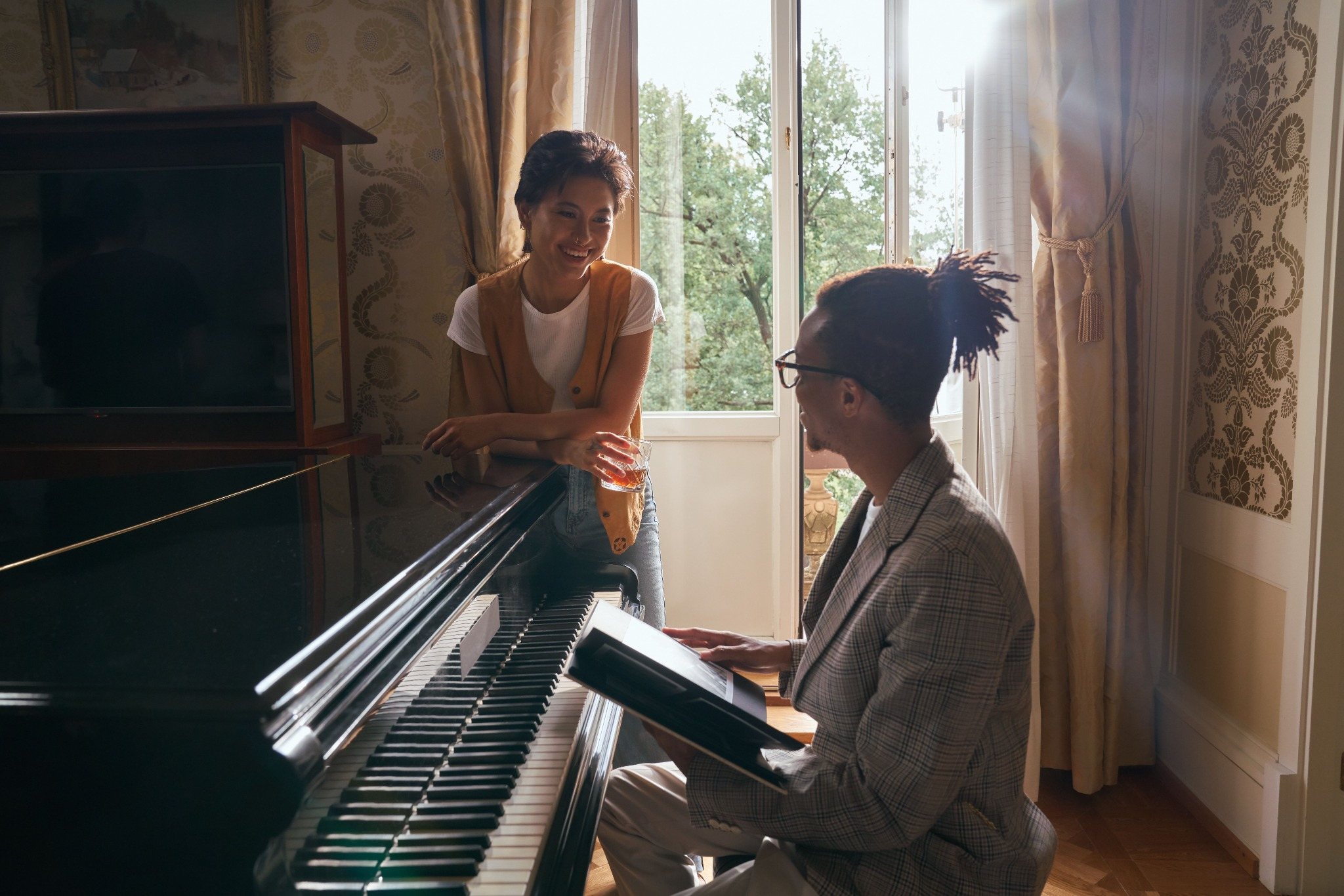
Musicians grow through small decisions repeated over time: listening more closely, shaping a phrase, and returning to a difficult passage. The piano should respond clearly enough to make that work rewarding.
What changes as a player develops
At the beginning, a consistent keyboard and a comfortable practice routine are essential. As technique develops, players may become more attentive to the range between soft and loud notes, the speed of repeated passages, and how the pedals shape resonance.
These differences are easier to understand by playing than by reading a specification sheet. Compare the same piece on several instruments, paying attention to the touch at quiet dynamics and the clarity of repeated notes.
Understand the action beneath the keys
In an acoustic piano, pressing a key sets a mechanical action in motion so a hammer strikes a string. Grand and upright actions are arranged differently; a grand’s horizontal mechanism generally offers advantages for rapid repetition and fine control. The condition and regulation of an individual instrument also influence how it feels.
Digital pianos use sensors and electronic sound generation. Weighted actions aim to recreate aspects of acoustic touch, but the response varies by model. If the player studies with a teacher, it is useful to ask which key action and pedal features best support the repertoire being learned.
Listen for tone, not just volume
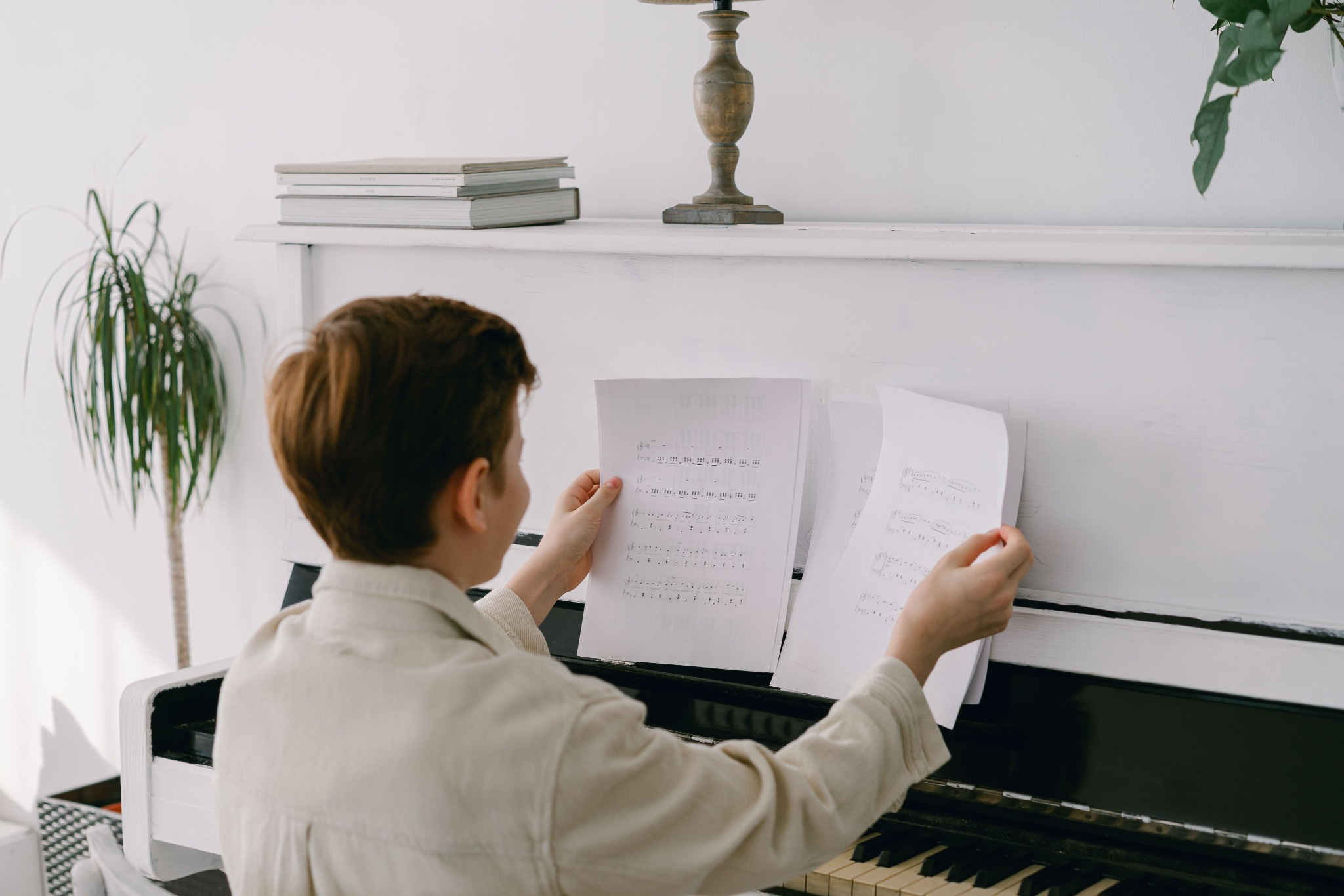
A piano’s character includes how it sounds at different dynamic levels and across the keyboard. Try slow melodic phrases, chords, and repeated notes. Compare the bass, middle register, and treble; listen for an even transition between them.
The room influences what you hear. A piano can sound different in a reflective showroom and a furnished home. Discuss room dimensions, floor surfaces, and placement before making a final decision.
Choosing an instrument for the next chapter
If you are upgrading, identify what the current instrument cannot do well enough. Is the action inconsistent? Do you need more dynamic control? Are you seeking a different tonal character? Bring those observations to the gallery so the comparison remains focused.
A thoughtful upgrade supports the musician’s goals without losing sight of everyday use, maintenance, and budget. A short appointment with time to play several instruments is often more useful than a long list of features.
Explore your options
Compare instruments and take the next step at your own pace.
Further reading
For the technical distinctions described here, see these manufacturer educational guides. Product features and service requirements vary by model.